

- Introduction: Why Online Selling Platforms Matter More Than Ever
- Online Selling Platforms vs Your Own Website: What’s the Difference?
- Etsy: A Leading Platform for Handmade and Creative Businesses
- Strategic Insight: Platforms Don’t Replace Marketing
- eBay: A Flexible Platform for Resale, Retail, and Scale
- Amazon and Amazon Handmade: Scale with Structure
- Shopify and WooCommerce: Owning the Sales Channel
- Alternatives to Etsy and eBay Worth Considering
- Strategic Insight: Platforms Should Work Together, Not Compete
- Marketplace SEO: How Products Get Discovered
- Driving External Traffic to Online Selling Platforms
- Social Media as a Sales Accelerator
- Email Marketing: Turning One-Time Buyers into Repeat Customers
- Common Mistakes Businesses Make on Online Selling Platforms
- Not Every Platform Fits Every Business
- Handmade, Creative, and Niche Brands
- Retail, Resale, and Physical Product Businesses
- Digital Products and Service-Based Businesses
- Tourism-Driven and Experience-Based Businesses
- A Simple Framework for Platform Selection
- Platforms Are Tools, Not the Strategy
- The Platform Combination That Scales
- Common Myths About Online Selling Platforms
- Making the Right Decision for Your Business
- Build a Selling System, Not Just Listings
Understanding Online Selling Platforms
Introduction: Why Online Selling Platforms Matter More Than Ever
Online selling platforms have become one of the most important growth tools for modern businesses. Whether you sell handmade products, physical goods, or digital services, the ability to reach customers beyond your immediate location is no longer optional — it’s expected.
Today, consumers rarely start their buying journey on a single brand’s website. Instead, they browse online selling platforms they already trust. Marketplaces like Etsy, eBay, Amazon, and newer alternatives act as discovery engines, allowing businesses to reach customers who may never have found them otherwise. For many small and medium-sized companies, these platforms are the fastest way to validate products, test new markets, and generate consistent online revenue.
However, selling products online platforms are not all equal — and choosing the wrong one can limit growth, reduce margins, or create long-term dependency. Some platforms work best for handmade and creative goods. Others are ideal for resale, scale, or cross-border expansion. The most successful businesses understand that platforms are tools, not shortcuts, and they use them strategically rather than blindly.
This article explores the best online marketplaces to sell products, how they differ, and when alternatives make more sense. Most importantly, it explains how businesses can use platforms alongside their own websites and marketing channels to build sustainable e-commerce growth.
At Tulpa Digital Marketing, we work with brands that use online selling platforms as part of a wider digital ecosystem — combining marketplaces with SEO, paid advertising, email marketing, and conversion-focused websites to avoid over-reliance on any single channel.
Online Selling Platforms vs Your Own Website: What’s the Difference?
Before comparing specific platforms, it’s important to understand the fundamental distinction between marketplaces and owned platforms.
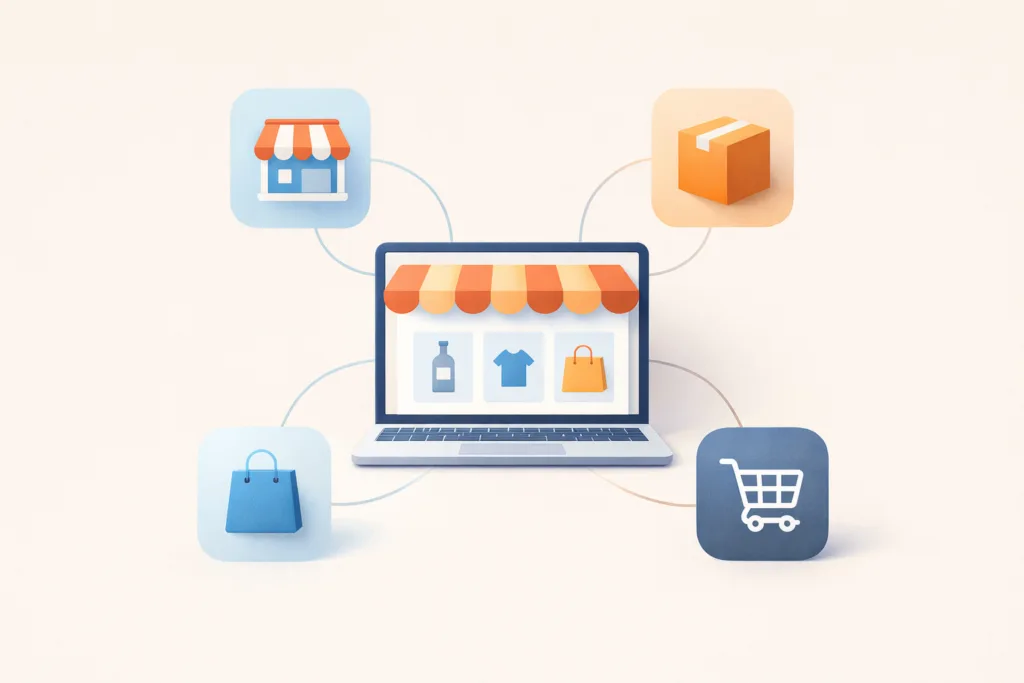
Online selling platforms such as Etsy, eBay, or Amazon provide instant access to large audiences. They handle much of the infrastructure — traffic, trust signals, and sometimes even logistics. This makes them attractive, especially for businesses entering e-commerce for the first time.
Your own website, typically built on platforms like Shopify or WooCommerce, offers something marketplaces never will: ownership. You control branding, customer data, pricing, remarketing, and long-term value. There are no algorithm changes or policy updates that can suddenly restrict your visibility.
The most effective approach is rarely “either/or.” Instead, high-performing brands use marketplaces for visibility and acquisition, then guide customers toward owned channels for repeat sales and higher lifetime value. This hybrid strategy reduces risk while maximising reach.
From a marketing perspective, this is where professional support becomes critical. A well-designed website paired with marketplace listings allows for consistent branding, better SEO performance, and smarter paid advertising campaigns — areas where Tulpa’s website development and digital strategy services often make the biggest impact.
Etsy: A Leading Platform for Handmade and Creative Businesses
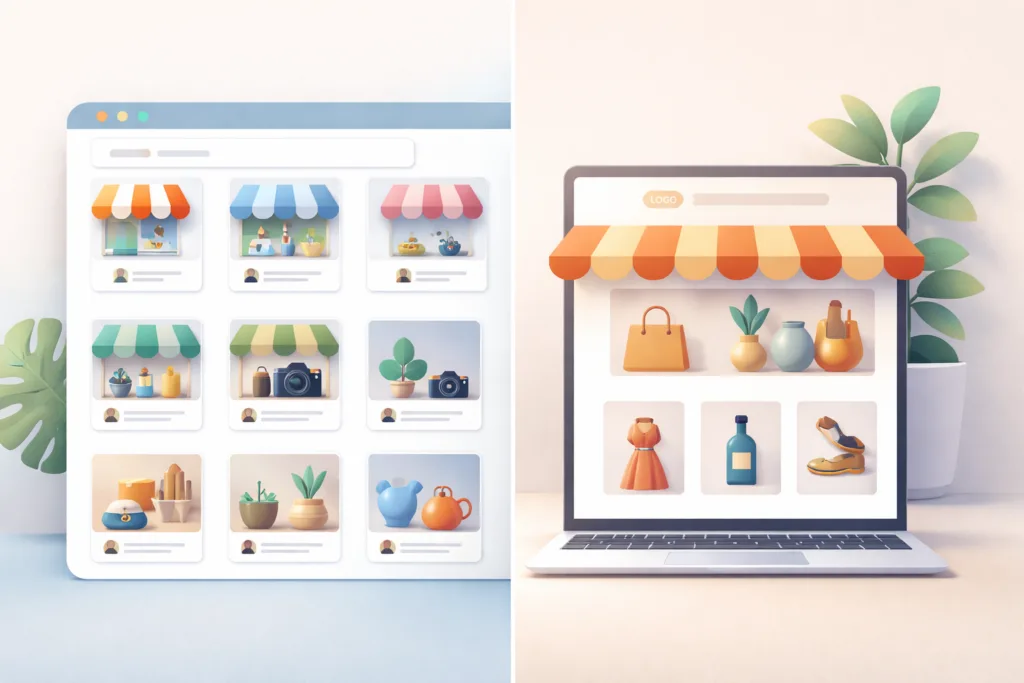
Among the best online marketplaces to sell products, Etsy stands out for creative, handmade, and niche goods. It attracts buyers actively searching for unique items, making it particularly effective for artisans, designers, and small-scale producers.
Etsy works best when the product itself tells a story. Handmade jewellery, home décor, art prints, stationery, and personalised gifts tend to perform well. Sellers benefit from built-in trust, international reach, and strong internal search visibility.
That said, Etsy also has limitations. Competition is high, fees can add up, and branding control is restricted. Sellers don’t own customer relationships in the same way they would on an independent website. This makes Etsy ideal for discovery and early traction, but less suitable as a long-term standalone solution.
Businesses that scale successfully on Etsy often do so by pairing it with strong branding, professional product photography, and off-platform marketing. Social media and SEO-driven content can dramatically improve listing visibility, while an external website creates a path toward customer ownership and repeat purchases.
This is where many Etsy sellers turn to ecommerce platforms for small businesses like Shopify — not to replace Etsy, but to complement it strategically.
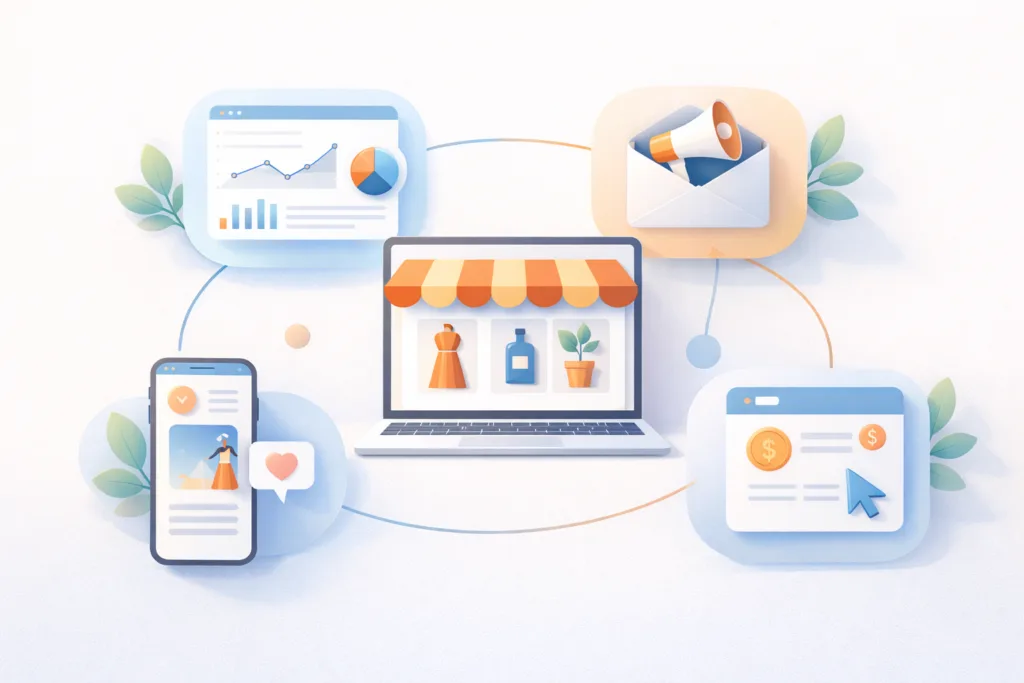
Strategic Insight: Platforms Don’t Replace Marketing
A common misconception is that listing products on a popular platform automatically leads to sales. In reality, platforms reward optimised listings, strong engagement, and external traffic signals.
Search visibility inside marketplaces depends on product titles, descriptions, images, pricing, reviews, and performance history. Off-platform marketing — SEO, paid ads, email campaigns, and social media — amplifies these signals.
This is why many businesses struggle despite being on “the right platform.” Without a clear strategy, even the best marketplace presence can underperform.
At Tulpa, we help businesses integrate online selling platforms into a broader digital marketing framework — ensuring listings, websites, and campaigns support each other rather than compete.
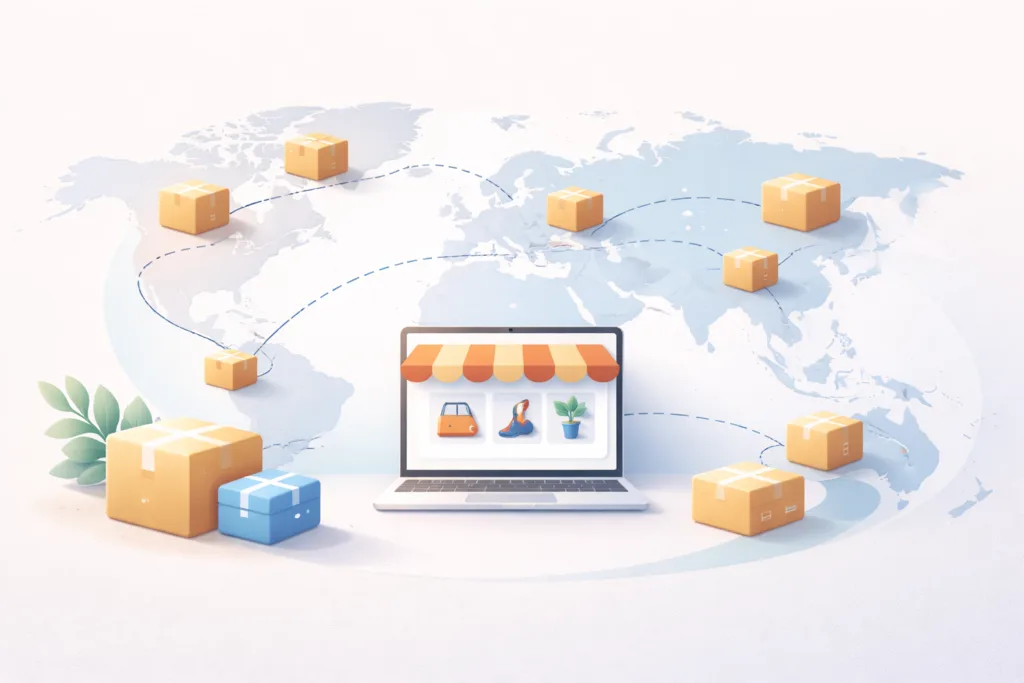
Choosing the Right Online Selling Platforms
eBay: A Flexible Platform for Resale, Retail, and Scale
Among the major online selling platforms, eBay remains one of the most versatile. While it’s often associated with auctions and second-hand goods, eBay has evolved into a powerful marketplace for new products, refurbished items, and branded retail.
For businesses selling physical products, eBay offers strong advantages: international reach, buyer trust, and flexible pricing models. Sellers can list items as fixed-price products, run promotions, or test demand with limited inventory. This makes eBay particularly effective for businesses that deal in electronics, tools, collectibles, spare parts, or clearance stock.
However, eBay’s strength is also its challenge. Competition is intense, margins can be tight, and success depends heavily on pricing strategy, seller ratings, and logistics. Businesses that treat eBay as a volume-driven channel — rather than a branding platform — tend to perform best.
For many sellers, eBay works well as a revenue channel, not a brand home. That’s why pairing eBay with a standalone website allows businesses to capture repeat customers, improve margins, and reduce reliance on marketplace fees.

Amazon and Amazon Handmade: Scale with Structure
Amazon is one of the largest selling products online platforms in the world — but scale comes with complexity. For businesses capable of managing logistics, inventory, and compliance, Amazon offers unmatched reach and purchasing intent.
Amazon Handmade, in particular, opens doors for artisans and premium handmade brands. It provides exposure to customers actively seeking quality and craftsmanship, though it still requires strict operational discipline.
That said, Amazon is not suitable for every business. Fees, advertising costs, and competitive pressure can erode margins quickly. Sellers also face limited control over branding and customer relationships. Algorithm changes or policy shifts can have immediate impact on visibility and revenue.
The businesses that succeed on Amazon usually do so by:
- Treating it as a high-volume sales engine
- Investing in professional product listings and ads
- Supporting Amazon sales with off-platform marketing
For long-term stability, Amazon performs best when integrated into a wider e-commerce ecosystem — supported by a branded website, SEO, and email marketing.

Shopify and WooCommerce: Owning the Sales Channel
While marketplaces provide exposure, ecommerce platforms for small businesses like Shopify and WooCommerce provide ownership. These platforms allow businesses to control branding, pricing, data, and customer experience — all critical for sustainable growth.
A Shopify or WooCommerce site becomes the central hub of your e-commerce strategy. Marketplaces feed traffic into it, while email marketing, SEO, and paid ads build long-term value. This approach reduces dependence on algorithms and third-party policies.
For businesses that want to scale, ownership matters. You can:
- Build remarketing campaigns
- Create loyalty programs
- Optimise conversion paths
- Improve margins over time
From a marketing standpoint, this is where professional website development and digital strategy play a crucial role. A poorly built site will underperform regardless of traffic. A well-structured one becomes a powerful sales asset.

Alternatives to Etsy and eBay Worth Considering
Many businesses eventually look for alternatives to Etsy and eBay as they grow. These alternatives often perform better for specific product categories or audience types.
Examples include:
- Fashion-focused platforms like Depop or Vinted
- Curated marketplaces such as Not On The High Street
- Direct-to-consumer stores with paid traffic strategies
These platforms often offer better branding opportunities, lower competition, or more engaged audiences — but they also require stronger marketing execution.
Choosing the right alternative depends on product type, margins, audience behaviour, and long-term goals. There is no universal “best” platform — only the best fit for your business.
Strategic Insight: Platforms Should Work Together, Not Compete
The most successful businesses don’t ask, “Which platform should I use?”
They ask, “How do these platforms work together?”
Marketplaces drive discovery. Websites build brand equity. Email retains customers. Paid ads accelerate growth. When aligned properly, each channel strengthens the others.
This integrated approach is where many businesses struggle — and where expert guidance makes the difference. Without a clear strategy, sellers often spread themselves too thin or rely too heavily on a single platform.

Marketing Online Selling Platforms Effectively
Marketplace SEO: How Products Get Discovered
Being present on online selling platforms is only the starting point. Visibility inside marketplaces is driven by internal search algorithms, and understanding how these work is essential if you want consistent sales rather than sporadic wins.
Most platforms rank products based on relevance, performance, and trust. This means titles, descriptions, pricing, images, reviews, and conversion history all influence how often your products appear. Sellers who optimise listings strategically outperform those who simply upload products and wait.
Marketplace SEO mirrors traditional search engine optimisation in many ways. Clear, descriptive titles that match buyer intent perform better than vague branding language. Product descriptions that answer real customer questions reduce friction and improve conversion rates. High-quality imagery builds trust and increases engagement, which further reinforces visibility.
Businesses that treat marketplace listings as static content rarely succeed long-term. Regular optimisation, testing, and performance monitoring are required to stay competitive — especially in crowded categories.
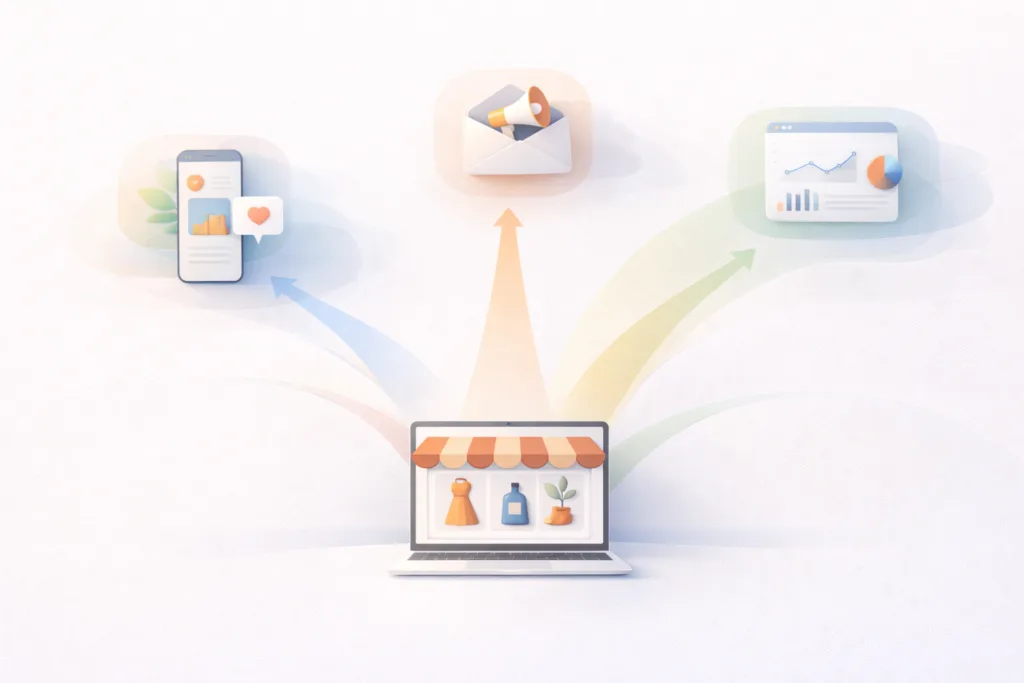
Driving External Traffic to Online Selling Platforms
One of the most effective ways to outperform competitors on marketplaces is to send external traffic to your listings. Platforms reward listings that attract visitors and convert them efficiently.
External traffic can come from:
For example, a seller using Instagram to showcase products can link directly to Etsy or Shopify listings. When users arrive already interested, conversion rates increase — which signals quality to the marketplace algorithm and improves organic placement.
This is where integrated digital marketing becomes essential. Marketplace success is rarely isolated. It is amplified by strong social media presence, paid campaigns, and SEO-driven content that funnels users toward listings.
At Tulpa, we frequently see the strongest results when marketplace listings are supported by broader digital campaigns rather than left to perform in isolation.

Social Media as a Sales Accelerator
Social platforms play a critical role in modern selling products online platforms. While marketplaces capture intent, social media creates it.
Short-form video, lifestyle imagery, and behind-the-scenes content humanise products and build trust before a buyer ever reaches a checkout page. This is especially powerful for handmade, creative, or premium goods where story and authenticity matter.
Rather than posting generic product images, high-performing sellers focus on:
- Showing products in real-world use
- Highlighting craftsmanship or sourcing
- Creating urgency around limited stock or seasonal availability
Social content doesn’t need to sell aggressively. Its role is to prime interest, making conversion easier once users reach the marketplace or website.

Email Marketing: Turning One-Time Buyers into Repeat Customers
One limitation of marketplaces is restricted access to customer data. This makes it difficult to build long-term relationships unless sellers act strategically.
Email marketing bridges this gap. By encouraging customers to join mailing lists through packaging inserts, post-purchase follow-ups, or website incentives, businesses can move relationships beyond the marketplace.
Email allows sellers to:
- Promote new collections
- Announce restocks
- Offer exclusive discounts
- Drive repeat traffic back to owned platforms
This is particularly valuable for businesses using marketplaces for discovery while relying on ecommerce platforms for small businesses like Shopify to retain customers and improve lifetime value.

Common Mistakes Businesses Make on Online Selling Platforms
Many sellers struggle not because of their products, but because of avoidable strategic mistakes.
Common pitfalls include:
- Relying entirely on one marketplace
- Ignoring branding consistency
- Competing solely on price
- Underestimating platform fees and margins
- Neglecting external marketing
Successful sellers view marketplaces as part of a system, not the system itself. Diversification, optimisation, and strategic marketing protect revenue and enable sustainable growth.

Choosing the Right Online Selling Platform for Your Business
Not Every Platform Fits Every Business
One of the most common mistakes businesses make with online selling platforms is assuming that success on one platform automatically translates to another. In reality, platform effectiveness depends heavily on what you sell, how you sell it, and what role e-commerce plays in your broader business model.
Rather than asking “Which platform is the best?”, the more useful question is “Which platform is best for my type of business?”
Understanding this distinction allows businesses to invest time and resources where they are most likely to generate sustainable returns — instead of spreading themselves thin across channels that don’t align with their products or goals.

Handmade, Creative, and Niche Brands
Businesses selling handmade, creative, or small-batch products tend to perform best on platforms that prioritise discovery and storytelling.
Marketplaces such as Etsy — along with curated alternatives — attract buyers who value originality, craftsmanship, and uniqueness. These platforms are particularly effective for:
- Art and illustration
- Jewellery and accessories
- Home décor and personalised gifts
- Print-on-demand and custom items
However, reliance on a single marketplace can limit growth. As competition increases, margins tighten and visibility becomes harder to maintain. This is why many creative businesses use marketplaces as entry points, while gradually building their own ecommerce platforms for small businesses to strengthen branding and customer relationships.

Retail, Resale, and Physical Product Businesses
Retailers, resellers, and product-based businesses often benefit from platforms that prioritise volume, pricing flexibility, and logistics.
eBay and Amazon work particularly well for:
- Electronics and accessories
- Tools and spare parts
- Collectibles and refurbished goods
- Clearance or overstock items
These platforms reward operational efficiency and competitive pricing rather than brand storytelling. As a result, they perform best as transaction-driven channels, not brand-building tools.
Businesses in this category often see the strongest results when marketplace sales are supported by:
- Strong inventory management
- Paid advertising
- A separate branded website for higher-margin sales
This dual approach allows sellers to benefit from marketplace scale while protecting long-term profitability.

Digital Products and Service-Based Businesses
Not all online selling platforms are designed for physical products. Businesses selling digital goods or services — such as templates, courses, bookings, or consultations — require platforms that offer flexibility, automation, and control.
In many cases, marketplaces play a smaller role here. Owned platforms like Shopify or WooCommerce provide better tools for:
- Digital downloads
- Appointment bookings
- Subscription-based products
- Upsells and recurring revenue
Marketplaces may still be useful for discovery, but conversion and retention usually perform better on dedicated websites supported by SEO, content marketing, and email automation.

Tourism-Driven and Experience-Based Businesses
Businesses operating in tourism-heavy markets benefit from platforms that combine visibility with immediacy. Tourists often search, compare, and book within short timeframes.
Online selling platforms can support:
- Tour and activity bookings
- Experience vouchers
- Seasonal products
- Event-based offers
However, trust, speed, and clarity are critical. In these cases, marketplaces can drive discovery, but a professional website optimised for conversion often determines whether a booking actually happens.
This is where platform choice must be paired with strong website performance and paid advertising strategy — ensuring visitors don’t drop off at the final step.

A Simple Framework for Platform Selection
Instead of guessing, businesses can use a simple framework when evaluating selling products online platforms:
- Discovery: Where do customers first find products like yours?
- Conversion: Where are they most likely to buy?
- Retention: Where can you build long-term relationships?
Marketplaces often win on discovery. Owned platforms dominate retention. The most resilient strategies balance both.
This framework prevents overdependence on any single channel and creates flexibility as the business grows.

Building a Scalable Selling Strategy
Platforms Are Tools, Not the Strategy
After reviewing the major online selling platforms, alternatives, and use cases, one principle becomes clear: platforms alone do not create success. They enable it — but only when guided by a coherent strategy.
Businesses that struggle with selling products online platforms often jump from one solution to another, reacting to trends or competitors. In contrast, businesses that grow consistently take a structured approach. They understand the role each platform plays, how traffic flows between them, and where long-term value is created.
Marketplaces excel at discovery. Owned platforms excel at retention. Marketing channels connect the two.
The most resilient e-commerce businesses do not depend on a single platform. They design systems where each channel supports the others.

The Platform Combination That Scales
Rather than asking which platform to use, high-performing businesses focus on how platforms work together.
A scalable setup often looks like this:
- Marketplaces generate initial exposure and sales
- A branded website captures customer relationships
- SEO builds long-term discoverability
- Paid campaigns accelerate growth during key periods
- Email marketing drives repeat purchases and loyalty
This approach reduces risk. If marketplace visibility fluctuates, owned channels provide stability. If advertising costs rise, organic traffic and retention soften the impact.
This balance is what separates short-term wins from sustainable e-commerce operations.

Common Myths About Online Selling Platforms
Many businesses hesitate to invest properly because of persistent misconceptions.
One common myth is that marketplaces “handle marketing for you.” In reality, marketplaces reward sellers who already generate demand.
Another is that having a website is unnecessary if marketplace sales are strong. In practice, this limits branding, customer lifetime value, and long-term control.
Finally, some believe that more platforms automatically mean more sales. Without alignment, this often leads to operational complexity and diluted focus.
Clear strategy matters more than platform count.

Making the Right Decision for Your Business
Choosing the right online selling platforms requires honesty about:
- Your product type
- Your margins
- Your operational capacity
- Your long-term goals
There is no universal “best” platform — only the best configuration for your business today and where you want it to be tomorrow.
Businesses that plan ahead build flexibility into their systems, allowing them to adapt without starting over.

Build a Selling System, Not Just Listings
Online selling platforms are powerful — but only when used intentionally.
The businesses that succeed long-term don’t rely on algorithms or chance. They build selling systems that combine platforms, marketing, and ownership into a single, coherent strategy.
If your goal is short-term sales, marketplaces can deliver.
If your goal is sustainable growth, control and integration matter.
At Tulpa Digital Marketing, we help businesses design and implement e-commerce strategies that go beyond listings — connecting platforms, websites, SEO, paid media, and retention into a structure built for growth.
Whether you’re choosing your first platform or restructuring an existing setup, clarity at this stage prevents costly mistakes later.
If you want to ensure your online selling platforms are working together — not against each other — a structured digital strategy can make the difference between stagnation and scale.
Explore how a tailored e-commerce strategy can support long-term growth.
FAQ’s
What are online selling platforms?
Online selling platforms are digital marketplaces or systems that allow businesses to sell products or services online. These include large marketplaces like Etsy, eBay, and Amazon, as well as owned platforms such as Shopify or WooCommerce. Each platform serves a different role depending on visibility, control, and long-term growth goals.
Which online selling platforms are best for small businesses?
The best online selling platforms for small businesses depend on what you sell. Handmade and creative products perform well on Etsy, while resale and retail goods often succeed on eBay or Amazon. Businesses focused on branding and repeat sales benefit most from their own ecommerce website supported by marketing channels.
Should I sell on marketplaces or my own website?
Marketplaces are excellent for discovery and reaching new customers, while your own website provides ownership, branding control, and higher long-term value. Many successful businesses use both — marketplaces for exposure and a website for retention and scalability.
Are alternatives to Etsy and eBay worth considering?
Yes. As competition increases on major marketplaces, alternatives such as social commerce platforms, niche marketplaces, or direct-to-consumer websites can offer better branding opportunities, lower competition, and improved customer relationships, depending on the business model.
How do products get discovered on online selling platforms?
Most platforms use internal search algorithms that rank products based on relevance, performance, reviews, pricing, and engagement. Optimised listings, strong imagery, and external traffic all contribute to better visibility and consistent sales.
Can social media help improve marketplace sales?
Social media plays a critical role in driving external traffic to online selling platforms. By building awareness and interest before a customer reaches a listing, social content often increases conversion rates and improves overall marketplace performance.
Is email marketing useful if I sell through marketplaces?
Yes. While marketplaces limit direct customer data access, email marketing allows businesses to build long-term relationships beyond a single transaction. Collecting emails through websites or post-purchase touchpoints helps drive repeat sales and customer loyalty.
What are the biggest mistakes businesses make with online selling platforms?
Common mistakes include relying on one platform only, ignoring branding, competing purely on price, and neglecting external marketing. Successful sellers treat platforms as part of a broader system rather than standalone solutions.
How do I choose the right platform for my business?
The right platform depends on your product type, margins, operational capacity, and growth goals. A simple framework is to evaluate where customers discover your products, where they convert best, and where long-term relationships are built.
Do I need a digital strategy to succeed on online selling platforms?
A digital strategy helps align platforms, marketing, and ownership into a cohesive system. Businesses with a clear strategy are better positioned to scale, adapt to platform changes, and build sustainable e-commerce growth rather than relying on short-term wins.